
Lore
搜索"Lore"找到部影视作品

主演:
剧情:
When Romina learns that her husband has been cheating on her, she turns to the town's folk healer for help and obtains a love potion. But it seems the potion is working on everyone except her husband

主演:
剧情:
《创伤Trauma》剧情简介: 四个年轻的女性来到了智利的一个农村地区度假,结果被一名叫“胡安”前极端分子受害者和他的儿子“马里奥”残忍地袭击。在镇上没有找到帮助后,他们决定依靠镇上唯一的两个警察的帮助下去对付这些怪人。但是,最后,他们将发现,袭击他们的人血液中有 着智利历史上 最黑暗时期的直接遗产,他们将不得不面对战争遗留下的最残酷恐怖的敌人!
《创伤Trauma》是一部智利在2017年出品的战后阴影类型的重口味恐怖片,片中含有大量的血腥暴力、女同性恋、乱伦、强奸……等元素,基本不推荐18岁以下小朋友观看该片! 〖文/灵魂在线 〗
《创伤Trauma》是一部智利在2017年出品的战后阴影类型的重口味恐怖片,片中含有大量的血腥暴力、女同性恋、乱伦、强奸……等元素,基本不推荐18岁以下小朋友观看该片! 〖文/灵魂在线 〗


导演:
剧情:
The Paragon is the story of DUTCH, the crippled and angry victim of a hit and run, who takes a course on how to be psychic so he can find the car that hit him and take revenge on the driver. But when his teacher ,LYRA, draws him into her search for a mysterious crystal known as THE PARAGON, Dutch finds himself trapped in a parallel universe and on the run from Lyra's evil brother HAXAN and his band of psychic slaves.


导演:
主演:
剧情:
The film centers on the Herdman kids, who are the absolute worst. They lie, they steal, they bully… and they’ve hijacked the town Christmas pageant. As the rowdy and raucous siblings force themselves into all of the lead roles, they drive the pageant’s director, Grace (Judy Greer), and other members of her family, including husband Bob (Holmes), up the wall. But through their misfit mischief, these unlikely messengers might turn out to be the ones to deliver the town’s sensational and moving portrayal of the true meaning of Christmas.



剧情:
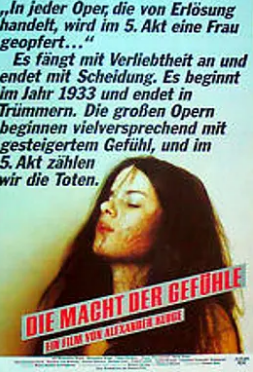
The Power of Emotion explains that emotion isn't to be confused with sentimentality. Emotion is ancient and more powerful than any art form. The film looks at young couples who run into difficulties as they try to translate their experiences of love into clear decision-making. A woman who has shot her husband provides a judge with a puzzle. Those who love can bring the dead back to life by means of co-operation. That's the focus of the opera, "The Power Plant of Emotions" and the "Opera of the 20th Century" cinema.
Alexander Kluge: The Power of Feeling
When I started working on The Power of Feeling, I was not in a rational state. I did not say, I have a subject and now I will make a film about it. Instead I was spellbound and observed in my direct surroundings, for example, how feelings move. I have not really dealt with the theme of my mother's death and the fact that she was the one who taught me "how feelings move." Nor have I dealt with how she died. That was an entire palette of feelings: "All feelings believe in a happy end," and everyone believes tacitly that they will live forever: The entire palette is somehow optimistic, a positive attitude towards life having been put on the agendaas long as she was young, as long as her body held out, from one day to the next she collapsed. She just suddenly collapsed, like in an opera where disaster takes the stage in the fifth act. It felt as if I had observed an air raid or a disaster.
The film The Power of Feeling is not about feelings, but rather their organization: how they can be organized by chance, through outside factors, murder, destiny; how they are organized, how they encounter the fortune they are seeking.What is all this organization of feelings about? Generally feelings tend to be a dictatorship. It is a dictatorship of the moment. The strong feeling I am having right now suppresses the others. For thoughts this would not be the case. One thought attracts others like a magnet. People therefore need affirmation by other people to be sure about their own feelings (to counteract the acquisition of their feelings through outside forces). Through the interaction of many people, for example, in public, the various feelings also have a magnetic attraction to one another just like thoughts do. Feelings communicate through their manifestation in public.
The cinema is the public seat of feelings in the 20th century. The organization is set up thusly: Even sad feelings have a happy outcome in the cinema. It is about finding comfort: In the 19th century the opera house was the home to feelings. An overwhelming majority of operas had a tragic end. You observed a victim.
I am convinced that there is a more adventuresome combination: Feelings in both the opera and traditional cinema are powerless in the face of destiny's might. In the 20th century feelings barricaded themselves behind this comfort, in the 19th century they entrenched themselves in the validity of the lethal seriousness.
Alexander Kluge: The Power of Feeling
When I started working on The Power of Feeling, I was not in a rational state. I did not say, I have a subject and now I will make a film about it. Instead I was spellbound and observed in my direct surroundings, for example, how feelings move. I have not really dealt with the theme of my mother's death and the fact that she was the one who taught me "how feelings move." Nor have I dealt with how she died. That was an entire palette of feelings: "All feelings believe in a happy end," and everyone believes tacitly that they will live forever: The entire palette is somehow optimistic, a positive attitude towards life having been put on the agendaas long as she was young, as long as her body held out, from one day to the next she collapsed. She just suddenly collapsed, like in an opera where disaster takes the stage in the fifth act. It felt as if I had observed an air raid or a disaster.
The film The Power of Feeling is not about feelings, but rather their organization: how they can be organized by chance, through outside factors, murder, destiny; how they are organized, how they encounter the fortune they are seeking.What is all this organization of feelings about? Generally feelings tend to be a dictatorship. It is a dictatorship of the moment. The strong feeling I am having right now suppresses the others. For thoughts this would not be the case. One thought attracts others like a magnet. People therefore need affirmation by other people to be sure about their own feelings (to counteract the acquisition of their feelings through outside forces). Through the interaction of many people, for example, in public, the various feelings also have a magnetic attraction to one another just like thoughts do. Feelings communicate through their manifestation in public.
The cinema is the public seat of feelings in the 20th century. The organization is set up thusly: Even sad feelings have a happy outcome in the cinema. It is about finding comfort: In the 19th century the opera house was the home to feelings. An overwhelming majority of operas had a tragic end. You observed a victim.
I am convinced that there is a more adventuresome combination: Feelings in both the opera and traditional cinema are powerless in the face of destiny's might. In the 20th century feelings barricaded themselves behind this comfort, in the 19th century they entrenched themselves in the validity of the lethal seriousness.