
Alexander
搜索"Alexander"找到部影视作品





剧情:
故事发生在1968年的瓦列霍,一宗离奇而又残暴的凶杀案让当地的居民和媒体陷入了恐慌之中,马特(贾斯汀·钱伯斯 Justin Chambers 饰)是负责调查此案的警官,尽管他一直在努力的追寻着种种蛛丝马迹,但依旧理不出头绪,来自上级和家庭的压力让马特渐渐感到有些力不从心。
六个月过去了,还未落网的凶手再度出动,一对情侣成为了他的刀下冤魂,嚣张的凶手甚至将电话打到了警局,并给多家媒体寄去了写有神秘密码的信件。凶手声称,改密码包含了破案的重要线索,而马特随即进入了紧张的破译工作之中,就在他越来越接近真相之时,他和家人们的关系亦走到了濒临破碎的边缘。
六个月过去了,还未落网的凶手再度出动,一对情侣成为了他的刀下冤魂,嚣张的凶手甚至将电话打到了警局,并给多家媒体寄去了写有神秘密码的信件。凶手声称,改密码包含了破案的重要线索,而马特随即进入了紧张的破译工作之中,就在他越来越接近真相之时,他和家人们的关系亦走到了濒临破碎的边缘。

导演:
主演:
剧情:
纽约警察和检察官的故事,跨越15个春秋,1990年首播,至今仍受到亿万观众瞩目的长剧。law & order第55届艾美奖最大的遗憾,已连续11年入围剧情类最佳电视剧奖提名的这部热门电视剧,这次却意外地未被提名,粉碎了它原本想要缔造的12次提名新高。本片融警匪与法庭于一体的电视剧,片中讲述的犯罪基本原于真实生活,往往是近期报纸上的头条新闻。节目分为两部分,上半部分介绍警察研究现场,征询证人,提审嫌疑犯等一系列的侦破活动,后半部分详尽记录了案件侦破的后期工作,案件转交到检查官手里,检查官衡量案情,起诉,直到庭审,节奏紧凑,扣人心弦。由于最终坏人不一定被绳之于法,所以观众看的时候往往暗自捏一把汗。

剧情:
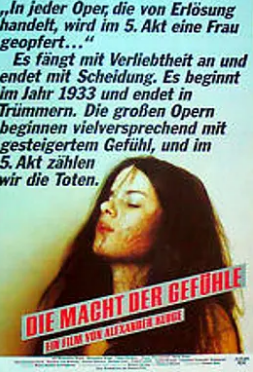
The Power of Emotion explains that emotion isn't to be confused with sentimentality. Emotion is ancient and more powerful than any art form. The film looks at young couples who run into difficulties as they try to translate their experiences of love into clear decision-making. A woman who has shot her husband provides a judge with a puzzle. Those who love can bring the dead back to life by means of co-operation. That's the focus of the opera, "The Power Plant of Emotions" and the "Opera of the 20th Century" cinema.
Alexander Kluge: The Power of Feeling
When I started working on The Power of Feeling, I was not in a rational state. I did not say, I have a subject and now I will make a film about it. Instead I was spellbound and observed in my direct surroundings, for example, how feelings move. I have not really dealt with the theme of my mother's death and the fact that she was the one who taught me "how feelings move." Nor have I dealt with how she died. That was an entire palette of feelings: "All feelings believe in a happy end," and everyone believes tacitly that they will live forever: The entire palette is somehow optimistic, a positive attitude towards life having been put on the agendaas long as she was young, as long as her body held out, from one day to the next she collapsed. She just suddenly collapsed, like in an opera where disaster takes the stage in the fifth act. It felt as if I had observed an air raid or a disaster.
The film The Power of Feeling is not about feelings, but rather their organization: how they can be organized by chance, through outside factors, murder, destiny; how they are organized, how they encounter the fortune they are seeking.What is all this organization of feelings about? Generally feelings tend to be a dictatorship. It is a dictatorship of the moment. The strong feeling I am having right now suppresses the others. For thoughts this would not be the case. One thought attracts others like a magnet. People therefore need affirmation by other people to be sure about their own feelings (to counteract the acquisition of their feelings through outside forces). Through the interaction of many people, for example, in public, the various feelings also have a magnetic attraction to one another just like thoughts do. Feelings communicate through their manifestation in public.
The cinema is the public seat of feelings in the 20th century. The organization is set up thusly: Even sad feelings have a happy outcome in the cinema. It is about finding comfort: In the 19th century the opera house was the home to feelings. An overwhelming majority of operas had a tragic end. You observed a victim.
I am convinced that there is a more adventuresome combination: Feelings in both the opera and traditional cinema are powerless in the face of destiny's might. In the 20th century feelings barricaded themselves behind this comfort, in the 19th century they entrenched themselves in the validity of the lethal seriousness.
Alexander Kluge: The Power of Feeling
When I started working on The Power of Feeling, I was not in a rational state. I did not say, I have a subject and now I will make a film about it. Instead I was spellbound and observed in my direct surroundings, for example, how feelings move. I have not really dealt with the theme of my mother's death and the fact that she was the one who taught me "how feelings move." Nor have I dealt with how she died. That was an entire palette of feelings: "All feelings believe in a happy end," and everyone believes tacitly that they will live forever: The entire palette is somehow optimistic, a positive attitude towards life having been put on the agendaas long as she was young, as long as her body held out, from one day to the next she collapsed. She just suddenly collapsed, like in an opera where disaster takes the stage in the fifth act. It felt as if I had observed an air raid or a disaster.
The film The Power of Feeling is not about feelings, but rather their organization: how they can be organized by chance, through outside factors, murder, destiny; how they are organized, how they encounter the fortune they are seeking.What is all this organization of feelings about? Generally feelings tend to be a dictatorship. It is a dictatorship of the moment. The strong feeling I am having right now suppresses the others. For thoughts this would not be the case. One thought attracts others like a magnet. People therefore need affirmation by other people to be sure about their own feelings (to counteract the acquisition of their feelings through outside forces). Through the interaction of many people, for example, in public, the various feelings also have a magnetic attraction to one another just like thoughts do. Feelings communicate through their manifestation in public.
The cinema is the public seat of feelings in the 20th century. The organization is set up thusly: Even sad feelings have a happy outcome in the cinema. It is about finding comfort: In the 19th century the opera house was the home to feelings. An overwhelming majority of operas had a tragic end. You observed a victim.
I am convinced that there is a more adventuresome combination: Feelings in both the opera and traditional cinema are powerless in the face of destiny's might. In the 20th century feelings barricaded themselves behind this comfort, in the 19th century they entrenched themselves in the validity of the lethal seriousness.