
西班牙,德国,瑞士
搜索"西班牙,德国,瑞士"找到部影视作品




导演:
剧情:
总督察MAIK一直拼命狩猎连环杀手。当凶手人质,在柏林街头,MAIK的团队跟随他的足迹进入迷宫的地铁隧道。检测他们的地图上没有标明一个古老的防空洞,他们找到了被绑架的女人。 由于他们试图以释放她,一个炸弹,已经被操纵她的爆炸,杀死的女人瞬间... MAIK的调查导致他乌,谁揭示了另一种的存在,忘了系统的隧道的建设计划已被长期失去了在德国民主共和国。 然后,另一名女子被绑架 - MAIK的怀孕女友Bettina.Frantically中,MAIK装配了巨大的专案组找到了她在地铁隧道。 勉强躲避迎面而来的火车后,他突然晕了 - 只有唤醒在GDR医院 - 于1984年!

导演:
剧情:
what motivated me up to the new director's festival to catch 'martin frost' tonight was the brutal review that it got yesterday from the lead critic of the new york times, brutal dismissal, to be more accurate, 'the less said about (it) the better', she said, and i figured that any movie able to teach Ms Dargis the virtue of silence for even a few column inches would be worth the trip.
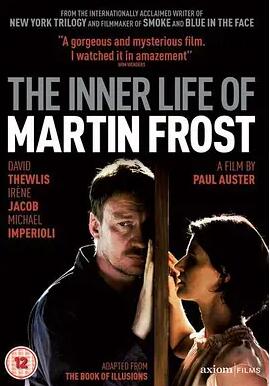
and worth the trip it was. we are brought into a paradise of limpidly beautiful visual textures. the oaken rhythms of a country house ensconced in a springtime parkland of luxuriant trees and luminous skies bestow the soothing natural blessing needed by the main character, martin frost (David Thewlis), a writer rubbed raw by the mechanics of finishing a novel in new york city. (Thewlis makes palpable the casualty of intrapsychic machinery sawed into daemonic reverb against the banausic hive). then paradise morphs into purgatory, leavened comedically, in Dante's sense, by the postmodern angelic visitations of Claire (Irene Jacobs) and Anna (Sophie Auster).
unfortunately, to my taste, the verbal dimensions of the film are flaccid, the logic more fanciful than imaginative, the narrative arc crippled by some irredeemably creaky plotting, especially at the crucial initiation of the relationship between martin and Claire where the seeds of common sense are thrown to the magpies of theatricality.
but so beguiling is the willful vulnerability of auster's fantasy, and the edgy interplay that it potentiates between Thewlis and Jacobs, and the camera, and later Sophie Auster, and the broad comedy of a rural everyman (Michael Imperioli), that it is very pleasant to be carried along on the visual foam of uncertain sensual delight, eddying into a feeling that this film's oddly louche light touch is uniquely adept at tracing some grave lineaments of the human heart.
go innocently.
and worth the trip it was. we are brought into a paradise of limpidly beautiful visual textures. the oaken rhythms of a country house ensconced in a springtime parkland of luxuriant trees and luminous skies bestow the soothing natural blessing needed by the main character, martin frost (David Thewlis), a writer rubbed raw by the mechanics of finishing a novel in new york city. (Thewlis makes palpable the casualty of intrapsychic machinery sawed into daemonic reverb against the banausic hive). then paradise morphs into purgatory, leavened comedically, in Dante's sense, by the postmodern angelic visitations of Claire (Irene Jacobs) and Anna (Sophie Auster).
unfortunately, to my taste, the verbal dimensions of the film are flaccid, the logic more fanciful than imaginative, the narrative arc crippled by some irredeemably creaky plotting, especially at the crucial initiation of the relationship between martin and Claire where the seeds of common sense are thrown to the magpies of theatricality.
but so beguiling is the willful vulnerability of auster's fantasy, and the edgy interplay that it potentiates between Thewlis and Jacobs, and the camera, and later Sophie Auster, and the broad comedy of a rural everyman (Michael Imperioli), that it is very pleasant to be carried along on the visual foam of uncertain sensual delight, eddying into a feeling that this film's oddly louche light touch is uniquely adept at tracing some grave lineaments of the human heart.
go innocently.